Thursday, March 27, 2014
Hungry Vampires and Vampires That Just Want to Live
 |
Writers seem to keep topping each other and making the hunger increasingly severe. I fully predict that eventually someone is going to write a Vampire story where our protagonist has to be hooked up to a constant feed of blood and has all these Renfields constantly grabbing more people off the street to keep it going.
Here are a lot of other common threads:
- Vampires have no satiety, or almost none. They crave blood constantly. They see a person, and their bodies basically react thusly: ‘hey, someone brought blood!’ They need a tremendous amount of willpower just to avoid killing everyone around them all the time. Why any Vampires that aren’t completely and utterly evil even bother living in society at all is anyone’s guess, but they do, and they rack up enormous body counts simply by existing.
- They crave blood regardless of all utility. They’re like reverse bloody Kantians (I must have blood regardless of utility). Twilight and Being Human take the cake, here: their Vampires don’t even need blood to live at all. In Being Human it’s basically an addiction that they have because…um, they’re Vampires and Vampires are supposed to drink blood?
In Twilight, Vampires are technically immune to starvation, according to the Illustrated Guide. Blood makes them stronger, I guess – even though they’re already strong enough to juggle minivans, so it seems redundant. Blood also makes them less hungry – kind of, temporarily – but they’re hungry most of the time anyway. Really, these guys should just take one for the team and accept that they’ll be hungry forever and live in the woods.
If real predators were that hungry all the time, they’d end up wasting most of the energy they ingested just trying to get more food in a loop that wouldn’t favor long-term survival.
 |
Many Vampires are creatures conceived in the mindset that says all predators are just trying to hurt us all the time and aren’t actually acting in their own self-interest by trying to frigging eat. It’s the same mindset that produces stories where predators seek out one particular target at all costs and pass up plenty of other viable food sources along the way and paints predators as having more in common with serial killers than hungry animals. Vampire fiction often tries to have it both ways.
- Vampires’ desire for blood is constant, but their need is not desperate. I don’t usually see Vampires that are on the verge of death if they don’t get blood right that minute. You’d never know it, given how hungry they are, but we’re definitely supposed to think that it’s the human in danger and not them. The writers severely downplay the conflict that’s actually associated with feeding on people. In the aftermath of the murder, the Vampires mourn the death of their victims or don’t, but there’s rarely any sense that they narrowly avoided dying themselves.
Twilight helped popularize that whole idea that if you get so much as a bloody paper cut around a Vampire you’re screwed. I’ve seen that in plenty of other places too, but it’s a pretty iconic scene in New Moon.
 |
| Jasper, is that how you reacted when one of your high school classmates misused the stapler? |
Still, though, the Cullens have got their wilderness animals to binge on, and even then, they can take long breaks in between feedings. Edward and his family certainly don’t go ‘camping’ all that often. There are huge sections of the books where their actual consumption of blood doesn’t come up at all. They may crave it all the time for some reason, but they’ll survive with relatively infrequent feeding periods. As we’ve established, they don’t even frigging need the blood at all, and their need to feed never puts them in any real danger.
My condition is exactly the opposite.
Get a nosebleed around me; I’ll get you a tissue. Cut yourself with a knife, and I know first-aid. Get a paper-cut around me – I honestly probably wouldn’t even notice, because my nose isn’t any better than a normal person’s and most people don’t bleed as much as Bella did after getting a frigging paper-cut. Paper is not razor wire, and I don’t have any razor wire at my house anyway.
 |
| Yes, that is the correct reaction. |
I just need to do it every day, or I’ll die.
If I fed Tuesday, but not Wednesday – well, every Thursday henceforth is going to be cancelled forever. I could drink from eight different people on Tuesday, and it wouldn’t matter – I’d still need blood Wednesday. Hell, I could drain a person dry on Tuesday if I was an evil idiot monster with an unlimited stomach capacity, and it wouldn’t matter. My body wouldn’t use the excess, and it has no way of storing it for later. You wake up the next day, and the stopwatch resets. I also can't use animal blood as a substitute and hospital blood is completely out of the question. I need a fresh, human, near-constant supply.
For Hungry Vampires, their lives are basically battles of wills between their urges and their sense of moral and physical restraint.
 |
Yeah. My type of vampire doesn’t get days off, but we at least get to take breaks.
With many Hungry Vampires, it’s unpredictable. Today may be another good day for you where nothing happens and you can forget about having to clean up after yourself that last time you fucking killed someone. Or it may be the day you kill some people or infect them against their will and have to deal with the consequences.
With me, it’s a daily grind. That’s not random. The only unknown is how I’m ultimately going to get blood today.
You can plan ahead, at least a little. But you have to be ready to change plans and reschedule at the drop of the hat.
My people have tried to respond to this by building an enormous social network around our need, or at least trying to. It’s by no means a stable network, but I thank each and every one of our hosts every day for what they do for us. Having said that, just plain running that network and maintaining it is a full-time job.
Hungry Vampires don’t do much in the way of planning when it comes to their condition. Their lives are all about picking up the pieces when their passions inevitably overpower them.
Their experience is one huge cycle of hunger, euphoria, and guilt.
Vampires of all stripes and types are not necessarily philosophers or even philosophy nerds, but they do tend to be the cause of philosophy in others.
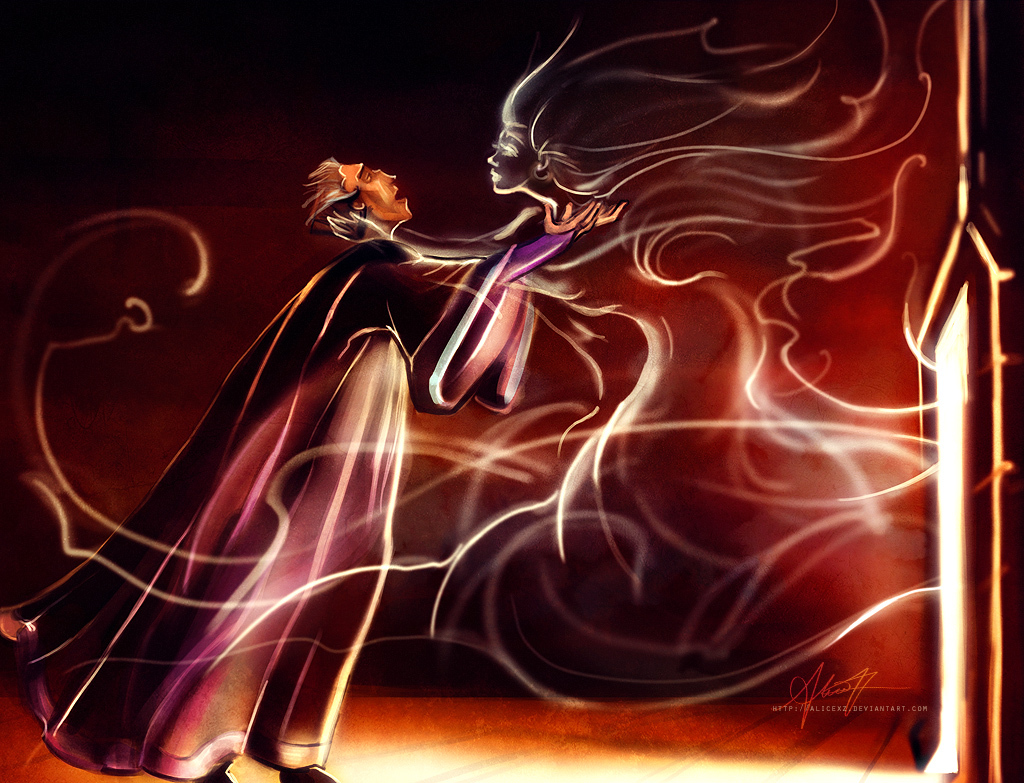
Hungry Vampires? They bring out everyone’s inner Puritanical Ascetic. Your natural desires are evil! There is absolutely no way to fulfill them in a way that is safe and mutually beneficial for others. You will either spend life in a state of perpetual deprivation where you are constantly relying on nothing but your noble willpower to save you and other people, or you are a shameful, ruined monster whose only joys lies in your continual destruction of sapient life which will ultimately prove unfulfilling and get you killed. Enjoy your dystopia!
 |
My people bring out everyone’s Consequentialist Utilitarian, including our own. Is it ethical to give one person an indefinite lifespan if it means that an indefinite number of people will get hurt? Hurt, but not killed – so the math balances out?
Sadly, even consensually and safely getting blood from hosts isn’t completely morally unambiguous. There are emotional consequences for getting involved with a paranoid, shady society of criminals. Our hosts have to live almost as much of a double life as we do, with all that that implies. We’ll never be able to get around the fact that even when we help our hosts financially, socially, or otherwise, there’s always that background motivation of: ‘see, this way, they’ll be less likely to leave us.’
And that’s not even the worst of it. No matter how much time and energy we invest in finding hosts, we never seem to have enough. Our blood requirement is that persistent. When we inevitably come up short, we resort to parasitic vampirism, either on an individual level or a societal one. In our slang, it’s called ‘red-lighting.’ Our victims don’t die, but they do get hurt. On a relatively good day, you can incapacitate someone relatively peacefully and seamlessly remove a pint of their blood, followed by a smooth memory erasure. It may still be an act of violence, but at least the suffering level is low.
On a bad day, you have to chase them down and maybe beat them up first. On a really bad day, you might not even be able to successfully incapacitate them, and they’ll feel everything that happens until you can wipe their memories. The rule is that you minimize harm as much as possible, but there’s no way of minimizing it all the way.
But at the end of the day, they’re still alive. And I’m still alive. The thousands of people we’ve sired all get to live. Is it worth it?
It’s hard to be objective about utilitarian dilemmas when they involve you personally. How can you give an objective answer to the trolley problem when you’re the one that might get run over? But I’ve been on the other side of this issue, too. I’m a sire. Every time we add someone new to the community, we ask that question again.
 |
| Alternatives? |
I’ve sired ten people, but I’ve rejected way more people than that.
Plenty of people in our culture think that not siring people is tantamount to killing them, since they’ll all die of aging eventually. Plenty of other people think we should stop siring people altogether, since it would ease the pressure off the hosts. They disagree about how the math works out, thinking that the current system causes too much suffering.
I do think siring is saving someone’s life. Ultimately, give me a utilitarian moral dilemma, I say: take the third option. Try to save every person involved in the trolley problem. In this case, the third option is ‘find an artificial blood substitute.’ Sadly, none of the ones that medical science has come up with yet have worked, and scientifically researching vampires is a huge hot-button issue in our society. Taking a third option is turning into a long-term goal, whether I like it or not. So at present, I’m still stuck with the same moral dilemma and I haven’t figured out a way to cheat.
.
I’m still here. I still think about this question, but in practice it doesn’t really matter what solid opinion I’ve formed if I’m living my answer every day.
 |
Image Sources in order of appearance:
Flickr user celesteh: http://www.flickr.com/photos/celesteh/102616364/sizes/o/
Flickr user rcrhee: http://www.flickr.com/photos/rcrhee/10864891045/sizes/m/
http://images2.fanpop.com/images/answers/43000/43618_1252760153049_400_310.jpg.
http://s.mcstatic.com/thumb/7707125/28846117/4/flash_player/0/1/interview_with_the_vampire_the_vampire_chronicles_1994_releasing_louis.jpg?v=4
http://s3.amazonaws.com/data.tumblr.com/tumblr_l6m0zkEeqO1qa4ey1o1_1280.jpg?AWSAccessKeyId=AKIAI6WLSGT7Y3ET7ADQ&Expires=1396011196&Signature=jXHwPFcL9fRL%2FhckCvOQd01Z1zA%3D#_=_
http://images4.fanpop.com/image/polls/252000/252138_1293840783196_full.jpg
http://theteenphilosopher.files.wordpress.com/2014/03/split-track.jpg
http://upload.wikimedia.org/wikipedia/commons/a/a7/Immortality.JPG


Sunday, November 24, 2013
What is This Thing You Call Boredom?
One of the standard objections to mass immortality is that if we lived a long time, we’d be bored.
Obviously, I have plenty of objections to that:
1. “So – boredom is a fate worse than death?”
 |
| Flickr user Julie Edgley |
(Trigger warning for suicide)
3. “People don’t get bored because they’ve just been alive way too long, and they'd better kill themselves so they can cross 'death' off their bucket list. They get bored because they're dissatisfied with their lives at present, and it's time for a change. They usually get new jobs, meet new people or move. They don't off themselves.”
4. “Suicidal people aren't tired of living. They're hopelessly depressed and looking for some way out. They can't imagine their lives getting better or they don't want to live through it until it does. I sincerely hope that if you ever meet a suicidal person and they just say that they're bored and that they've somehow 'seen it all,' you don't take them seriously.”
5. “So – you're okay with people that have indefinite lifespans offing themselves? Really? You wouldn't get a suicidal immortal person help, because their suicide is obviously just a natural consequence of their immortal ennui? What if it wasn't? What if the immortal was suicidal for all the reasons people are actually suicidal – how would you even know? You'd be a suicide enabler?”
6. “What difference does it make if the suicidal person is 213 years old instead of 13 or 81 or 31 years old? Would you pull a double standard and say suicidal tendencies are okay past a certain age? If so – what age? Can we vote?”
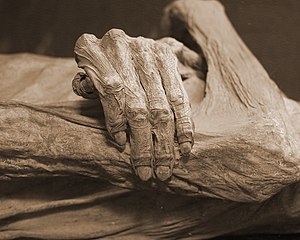
7. “Well – if we live long enough, maybe we'll be able to put people in living stasis if they just get tired of living anyway, and then they can be revived and be immortal again. That's a way better deal than we have now.”
 |
| Source: Wikimedia, Tomas Castelazo |
But I have to say, as a 143-year-old, my initial emotional reaction is as follows:
“What is this thing you call boredom?”
Really. If we’re talking about sustained, prolonged periods of boredom where you just don’t have a clue about what to do with yourself, everything you can think of sucks, you're tired of absolutely everything – yeah, I've never felt that.
I've had boring jobs before, sure. At those times, I was always thinking about the way to get a better job. Shockingly, I never blamed it on my supposed immortal ennui – I blamed it on the job. Being bored to death is a bad joke and a dead metaphor, not a career path.
 |
| Flickr user XPeria2Day |
It's also difficult to be bored when you're always with people. Seeing as how lots of modern conversation topics didn't exist when I was younger, I sure as hell haven't heard them all. And if meeting new people could ever get boring, most people would get bored of it way before age eighty.
I've also never spent one day alone.
Some of my younger friends will talk about days they slept in when they were single or their parents were away, and they just hung around the house or apartment alone and bored out of their minds. That's literally never happened to me.
I grew up with six siblings, and we sure didn't have separate rooms. Most of my early jobs – well, suffice to say, I didn't get days off, and if I did, I spent them with family. During those years, my family barely saw each other, and we wanted something to remember us by.
Vampire life – you definitely don't get days off. Spending an entire day without some form of contact with another person would literally be a death sentence for me. And I'm alive!
That is one thing about my own version of vampire life: it is a surefire cure for boredom. How do you be bored when life never gives you any time to be?
Really though – I thought the Internet was supposed to be a mass cure for boredom. You're bored? Have you read all of this Indie author's books? Have you read all the blogs on this subject? Or the most highly recommended fanfics? Have you read every new science journal that is freely available to the public now? Have you tried this new game? You know everything there is to know about the Byzantine Empire and you couldn't read more? You've watched every video on Youtube?
You couldn't possibly have seen every cat video yet, come on.
I grew up on the frontier. I'm pretty sure the worst boredom of my life was in my preteen years, before the family moved to Chicago. I couldn't have made my hundred teens that boring if I tried.
Somehow though, immortal ennui is practically the default theme in vampire and immortal fiction, and that's with folks that are way older than I am and should know full well how lucky they are to be here.
 |
| Source: Wikimedia Commons |
Better yet, for some mysterious reason, it's still usually the good Vampires in fiction who want mortality, and the evil ones pointing out the obvious.
Hey, even if you're a stereotypical reactionary conservative who thinks that all social and technological progress is just leading us further and further from the promised land of your youth – don't you still want to live a long time, just to see if the world goes back? It's happened before.
There's an oft-repeated saying about immortality: millions long for immortality who don't know what to do with themselves on a rainy day.
That seems like a pretty good test to me: have you ever had a moment where you didn't know what to do with yourself on a rainy day?
Me neither.
So we're fine.
 |
| Flickr user epSos.de |
Subscribe to:
Posts (Atom)